
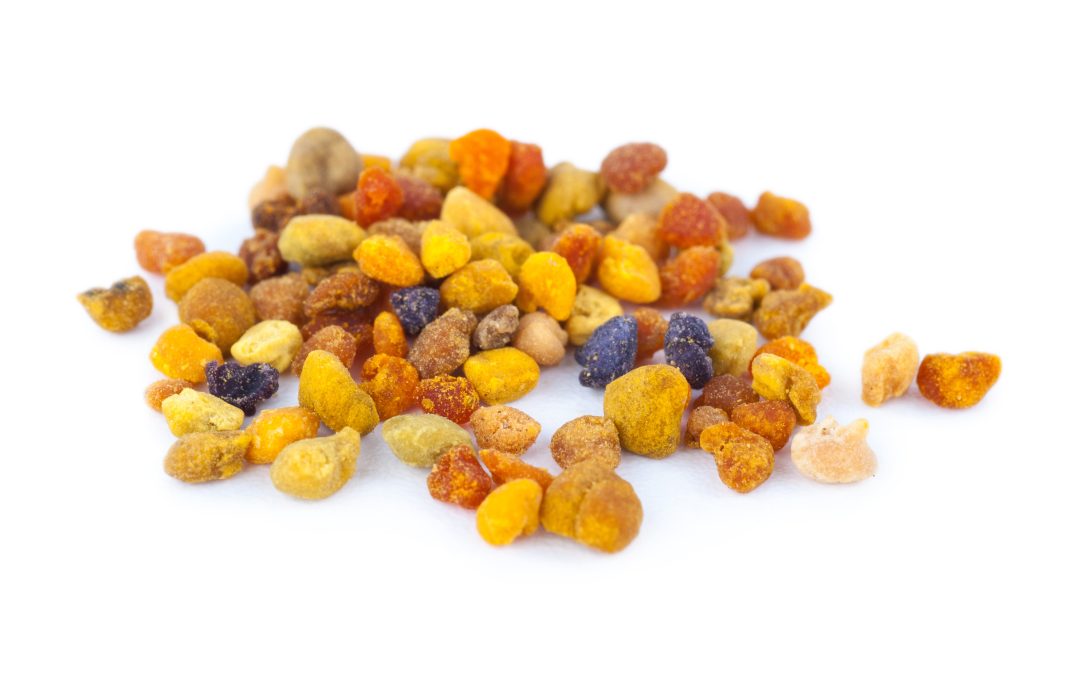
Walk down the supplement aisle or scroll through wellness blogs, and you’ll see jars and capsules of bee pollen everywhere. For years it’s been marketed as the ultimate superfood – rich in protein, vitamins, minerals, and antioxidants.
But here’s the thing: bee pollen is only the beginning of the hive’s nutrition story!
The real treasure is what happens after the honeybees get to work. Inside the hive, they transform pollen into something far more powerful: bee bread.
And then there’s Beeghee, which goes beyond both of them to create a living ferment unlike anything else that’s ever been on on the market.
So what’s the difference between bee pollen, bee bread, and Beeghee? And why does it matter, not just for your health, but for the health of the bees themselves? Let’s dig in.
What Is Bee Pollen?
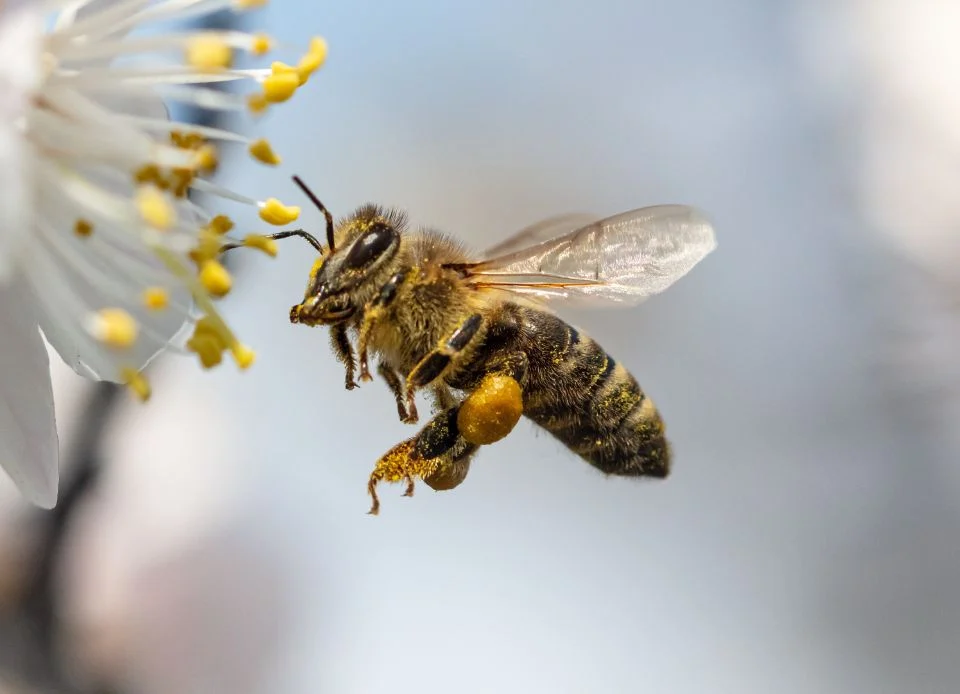
Bee pollen is the raw material of the hive. Worker bees collect it from flowers and pack it onto their hind legs with the help of a little nectar and salivary enzymes. Back in the hive, beekeepers can trap a portion of it at the entrance, brushing the pellets off the bees before they enter.
Nutritionally, bee pollen looks impressive on paper:
- It’s high in protein (up to 35%)
- It’s packed with amino acids, vitamins, minerals
- It contains antioxidants and polyphenols
That’s why it’s been branded as a “perfect food”, or the much maligned from overuse “superfood”. In this case though, given bee pollen’s makeup, it technically is.
But there’s a catch: most of it isn’t digestible.
Pollen grains are encased in an outer wall called the exine, made of sporopollenin – one of the toughest natural known polymers.
Humans lack the enzymes to break it down, which means a large fraction of the protein, amino acids, and bioactives in bee pollen simply pass through us unused, as very expensive urine.
In the (digestive) end, dried un-fermented bee pollen is like having a vault full of gold that you can’t open.
What Is Bee Bread?
The bees themselves have the key. Instead of eating raw pollen, they ferment it into bee bread.
Here’s how it works:
- In the hive, pollen is mixed with honey and bee saliva enzymes.
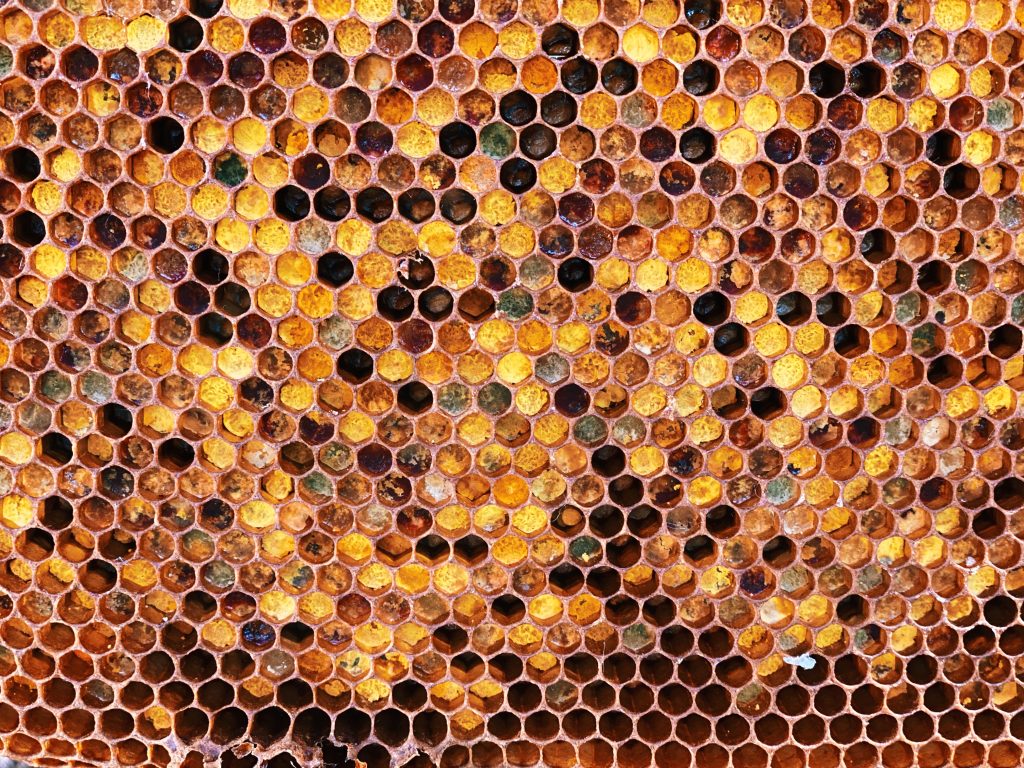
- It’s then packed into honeycomb cells (or cerumen pots for stingless bees).
- The bees then seal it and leave it to ferment through lactic acid bacteria and wild hive microbes.
The result is a soft, tangy, nutrient-dense food that the colony relies on to raise larvae and feed young bees.
Fermentation transforms pollen in three crucial ways:
- Unlocks nutrients – breaking down pollen walls so proteins, amino acids (like arginine), and polyphenols become bioavailable
- Adds probiotics – lactic acid bacteria, yeasts, and enzymes contribute living microbial benefits.
- Stabilizes & preserves – acidic, fermented bee bread resists spoilage naturally.
In short: bee pollen is raw potential, and bee bread is the activated food.
 The Problem With Commercial Bee Bread
If bee bread is so powerful, why isn’t it everywhere? Two reasons: availability and processing.
Availability: Bee bread is stored in the hive as the bees’ main protein source. To harvest it, you must take it directly from the comb. That means you’re robbing the bees of their food. Most commercial operations that sell bee bread remove everything they can collect which can puts stress on the honeybees and leads to weakened colonies. In short, too much extraction of bee bread jeopardizes hive health.
Processing: To sell bee bread commercially, most companies dehydrate or freeze-dry it. That makes it shelf-stable, but it also kills the living microbes and halts fermentation. The result? You still get some nutrients, but none of the living enzymatic activity that made bee bread uniquely special in the first place.
What you’re left with is a halfway product: more bioavailable than pollen, but no longer alive.
Where Beeghee Differs
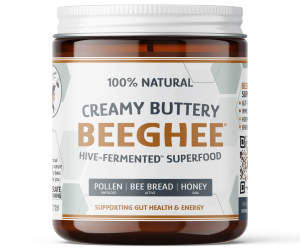 This is where Beeghee comes in.
We took inspiration directly from the hive, then carefully extended it. Instead of selling raw pollen or dead bee bread, Beeghee is a living, fermented blend of:
- Active bee bread
- Fresh pollen
- Raw honey
- Pure propolis
All of this BEEutiful blend is combined through a proprietary hive fermentation™ process that preserves the microbes, enzymes, and bioavailability of the living state.
Here’s are the benefits:
Living Ferment – Beeghee is never dehydrated, which means the fermentation is alive when it reaches your spoon. The probiotics, enzymes, and bioactive compounds are all still intact!
Nutrient Synergy – Instead of isolating one product (pollen) or stripping another (bee bread), Beeghee multiplies their effects by blending them together with honey and propolis, creating a nutrient matrix closer to the hive’s original design.
Sustainability for Bees – Unlike conventional bee bread companies (and most governments), we aren’t extractive and we don’t rob hives bare.
Beeghee harvests only at optimal times for hive health and always leaves colonies with more than enough food to thrive. By multiplying what the bees make through fermentation, we can create abundance without depleting their stores.
The result? A product that benefits humans and honeybees alike.
Health Impact Comparison: Pollen vs. Bee Bread vs. Beeghee®
| Property | Bee Pollen | Bee Bread (dried) | Beeghee® |
|---|---|---|---|
| Digestibility | Low (hard pollen shells) | Medium (fermented but microbes destroyed by drying) | High (living ferment, nutrients fully bioavailable) |
| Probiotics | None | None (dehydrated) | Yes – live lactic acid bacteria & enzymes |
| Antioxidants | Present but bound | Present but diminished | Active & bioavailable |
| Sustainability | Harvested raw daily | Robs colonies of stored protein | Minimal hive disruption, supports hive health |
| Energy | Fast sugar spike | Shelf-stable but inert | Smooth, sustained energy with no crash |
 For consumers, the difference is obvious:
- Bee pollen looks good on paper but delivers little in practice.
- Bee bread unlocks more nutrition but loses its living power once dehydrated.
- Beeghee is alive, bioavailable, and sustainable.
For bees, the difference is even more critical:
- Pollen harvesters take from bees daily.
- Bee bread harvesters rob colonies of their stored food.
- Beeghee harvests thoughtfully, partners with smallholder beekeepers to coordinate ideal collection periods, and ensures colonies remain strong.
For the world, it’s a new model: a living superfood that is good for you, and also good for the ecosystems that create it.
The Fifth Ferment™
Wine, bread, cheese, and beer shaped civilizations. Each was built on fermentation – the act of humans learning to transform raw materials into something greater.
Beeghee is the first ferment created by nature, for nature. It’s not about calories or intoxication, it’s about living bioactives that fuel circulation, energy, brain health, vitality, and longevity. It’s a category-defining food with roots in the hive and potential for the future.
Conclusion
Where bee pollen was the hype and bee bread is an upgrade, Beeghee® is the hive-rolution!
It’s the only truly living Hive Ferment™ on the market – the one that delivers maximum bioactivity for humans while sustaining the health of the honeybee colonies that make it possible.
Next time you see a jar of bee pollen or dehydrated bee bread, thank a honeybee but remember: the hive’s wisdom runs deeper than inert powders and dried indigestible pellets.
The real magic is only alive, fermenting, and waiting in every spoon of Beeghee!