
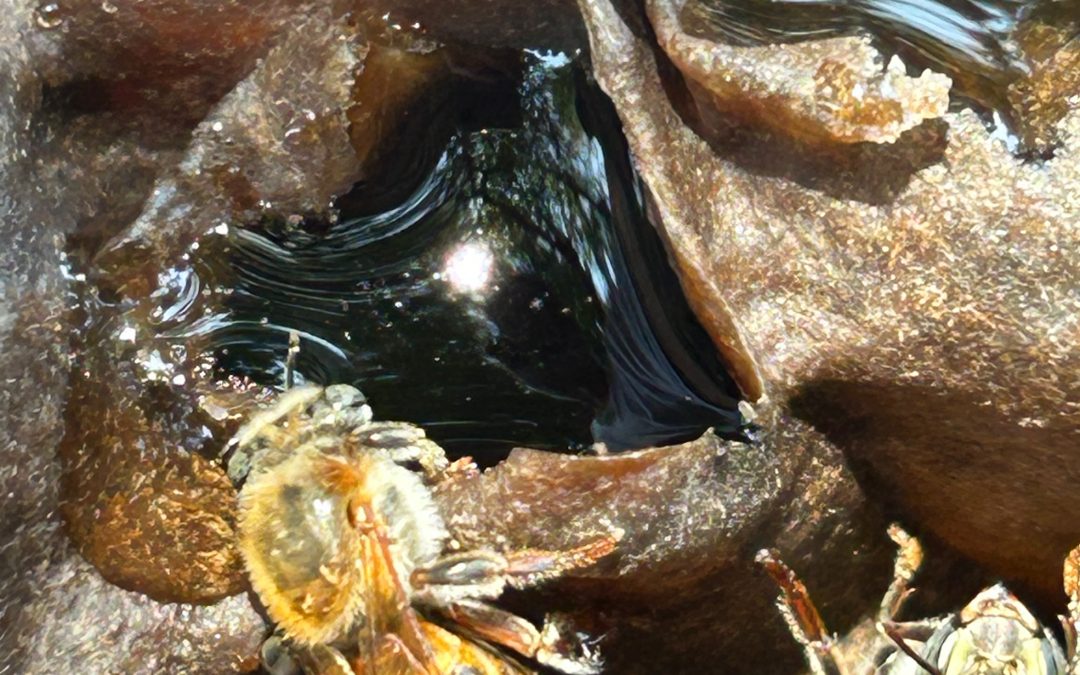
If you’ve only known honey from combs, meet the outliers: Melipona (Americas) and Trigona (tropical Old World) stingless bees. Their honeys (mieles) are so rare, so alive, and so unlike supermarket honey that many cultures treat them more like medicine than sweetener. In Mayan tradition, for example, Melipona beecheii honey has centuries of therapeutic use and sacred Mayan honeybee status.
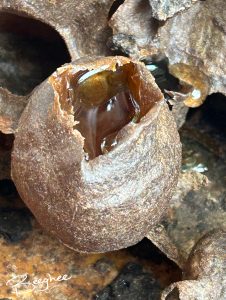
A honey pot from the sacred Melipona honeybee in México
What Makes Stingless Bee Honey Different?
It’s naturally fermented, stored in pots (not comb).
Stingless bees don’t cap honey in hexagonal wax combs the way Apis mellifera does. They build cerumen “honeypots” which are little amphoras of wax + plant resins (propolis). In these pots, the honey’s higher moisture content and native microbes keep working, so the honey can be tangier, more aromatic, and gently fermented…hence the term “pot-honey.”
A living, tangy profile (and more liquid).
Compared with typical honey (~17% water), stingless bee honeys often carry higher moisture and organic acids; yeasts and bacteria can convert part of the sugars into alcohols and organic acids during storage, shaping that bright, almost balsamic acidity and umami note chefs love.
Bioactivity beyond the sweet.
Reviews and recent studies report antimicrobial, antioxidant, anti-inflammatory and even wound-healing activity in stingless bee honeys—attributes that vary by species, flora, and handling.
Melipona vs. Trigona (and Why Supply Is Tiny)
- Melipona (e.g., M. beecheii in Mesoamerica) produce very small harvests, are sensitive to disturbance, and are traditionally kept for cultural/medicinal use more than bulk honey yields – hence true rarity.
- Trigona (SE Asia, Africa, Australia) include many species with diverse honeys; their pot-honey also shows fermentation signatures and complex acids that differ from Apis honey.
Fermentation 101: Why It’s “Fermented Honey”
Inside those resin-lined pots, native lactic- and acetic-fermenting microbes (plus yeasts) reshape the honey: some sugars are consumed; organic acids rise, and flavor deepens.
Think of it as a natural, slow, hive-side fermentation – not an added culture in a factory. This is why stingless bee honey can be more fluid, less prone to crystallization, and notably tart.
Nutrition & Function (Short List)
- Organic acids & phenolics → antioxidant & antimicrobial potential.
- Propolis contact in pots → unique resin-derived compounds may diffuse into honey.
- Traditional wound and eye applications documented for Melipona in Mesoamerica (cultural use ≠ medical advice).
Note: Composition varies widely by species, season, and flowers. Always source from transparent producers.
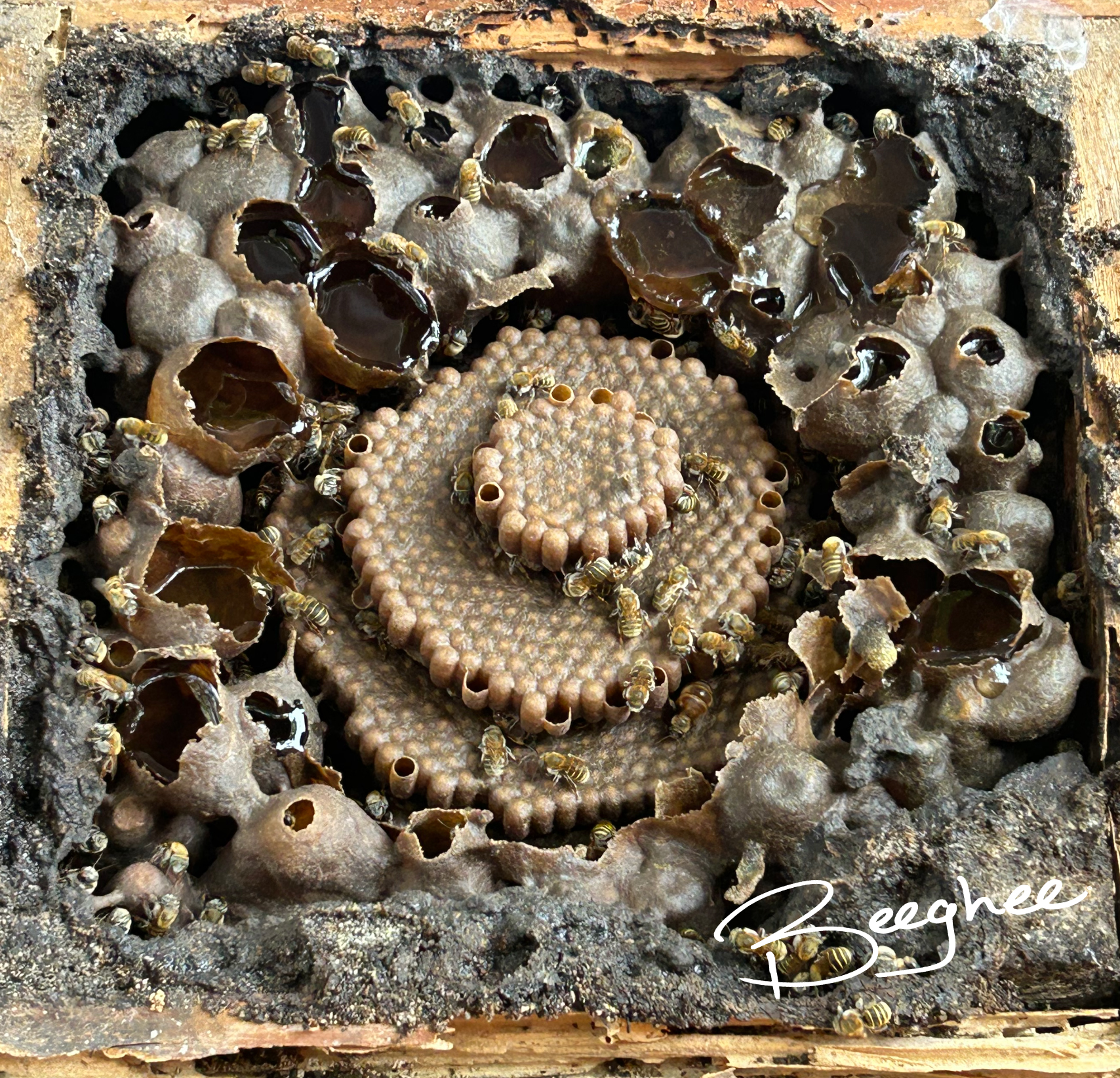
Miel de Melipona, also known as honey from the sacred Mayan bee – even their hive is built like a temple!
How Stingless Bee Honey Compares to “Famous” Honeys
- Mānuka (New Zealand): celebrated for non-peroxide antimicrobial power tied to MGO/UMF grading, an entirely different mechanism than pot-honey’s fermentation-driven acidity and bioactives. Also: Mānuka’s high price attracts counterfeits; always verify certifications.
- Sidr (Ziziphus): prized monofloral honey from the Middle East/North Africa; typically thick, aromatic, non-fermented, with its own mineral and phenolic fingerprint – again, a different style than fluid, tart pot-honey.
- Jamun (Syzygium cumini): Indian subcontinent honey marketed for a lower glycemic swing relative to table sugar; flavor leans dark-fruity. It’s not fermented in a pot – it has a distinct terroir and a different set of claims.
- Himalayan “mad honey” (Apis laboriosa): a separate category linked to grayanotoxins from rhododendron nectar – there are psychoactive risks, so it is not comparable to Melipona/Trigona pot-honey.
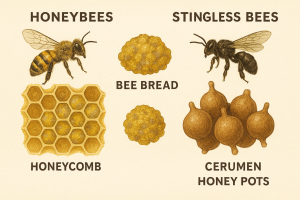
Apis honeybee and Stingless honeybee differences – both produce bee bread in the hive, which are as uniquely different as their honey!
How to Taste (and Use) It
- Savor neat first, like a top-shelf spirit: note the acidity, light effervescence, and botanical “wine-like” complexity.
- Pair with fresh cheeses, citrus, cacao, Veracruz coffee, or drizzle over fermented foods (yogurt, kefir) to amplify the live-culture theme.
- Store cool and sealed; expect natural variation – that’s the point.
Why It Matters
Stingless bee honeys aren’t just scarce; they represent distinct bee species, fragile habitats, and deep food heritage. Choosing verified Melipona or Trigona honey supports meliponiculture, biodiversity, and keeps ancestral knowledge alive.
Bottom line: If Mānuka is the benchmark for graded antimicrobial honey, pot-honey is the hive-fermented™, terroir-driven outlier – rarer, tangier, and utterly captivating.
Perfected by nature.
Fermented by bees.
Awakened for humans.
Stingless bee honey is one of the most wonderful discoveries that we’ve made in the process of developing Beeghee® because it’s a stand-alone product that, while very expensive, offers incredible health benefits!
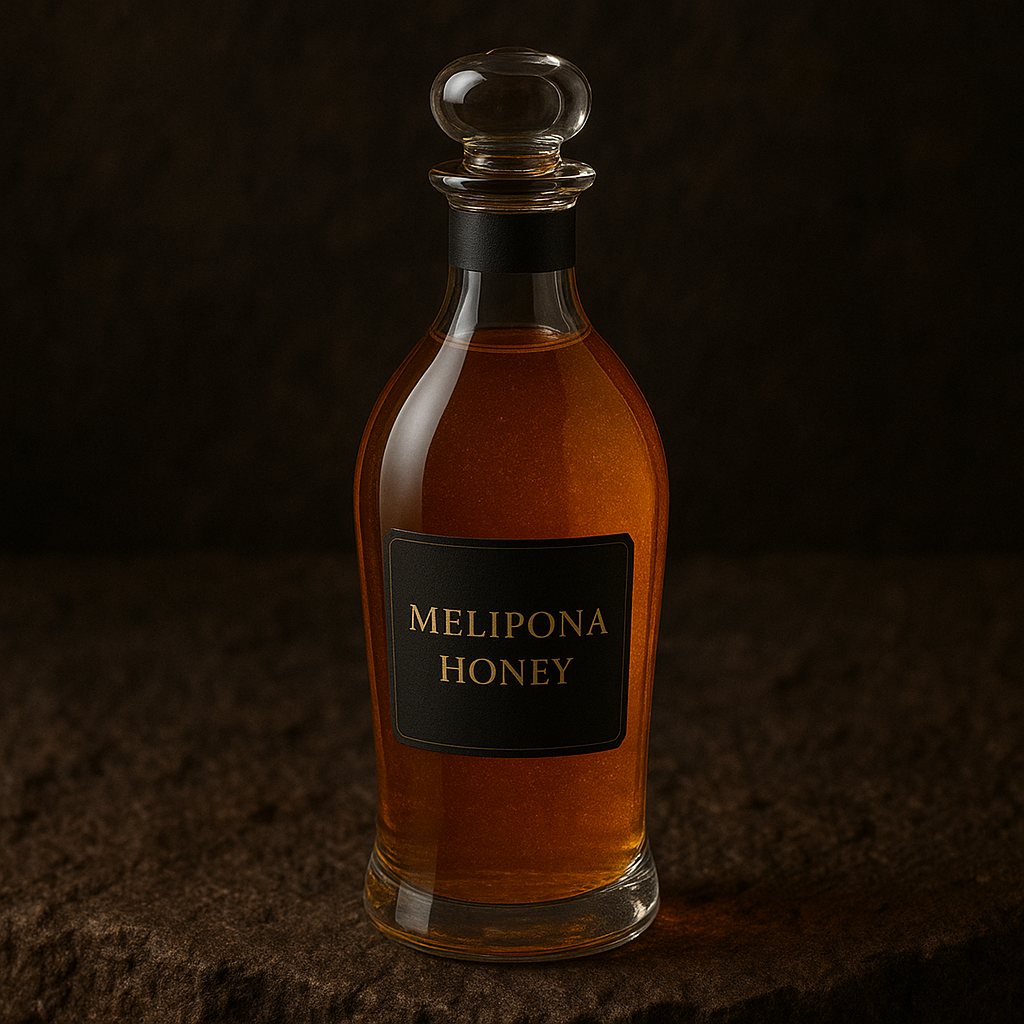
Interested in rare stingless bee honey from the Melipona or Trigona honeybees? Contact us for availability!